Climbing Dainichidaira

IMG_0613

There’s something magical about childhood friends and beautiful places.

David and I have the same travel style. We don’t plan much. With just a loose idea in our heads of what might happen, we have the freedom to be spontaneous.

Last year, David took a solo six-month trip traveling overland from Israel to Japan. He walked, hitchhiked, took buses, and boats while passing through Egypt, Georgia, Azerbaijan, Kazakhstan, Uzbekistan, Mongolia, and China, until he finally took a ferry to Japan. He slept on beaches, in caves, and in strangers houses (as well as the occasional hotel!) During his trip, he carried a tiny backpack that contained a sleeping bag, a change of clothes, a water purifier, and a few other necessities.

I’m lucky to call this adventurous soul my friend. Our parents have been close since we were babies, so we know each other pretty well. David is currently living near Shizuoka on the east side of Japan with his Japanese girlfriend, so we decided to meet up and travel together for a few days.

At first we were going to tackle Mount Fuji, but after hearing tales of how painfully crowded it would be, we decided to find another hiking spot. A fellow English teacher recommended we check out Mt. Tate, so off we went.

The drive was supposed to take 4 hours, but we added a fair few since we stopped so many times. Whenever I see something that looks interesting, I like to investigate.

At a roadside orchard, we were gifted a few nashi. We tried to pay for them but the saleslady wouldn’t hear of it.

IMG_0424

We soaked in the Sea of Japan, letting the water splash us to cool us down from the hot and humid day.
IMG_0398

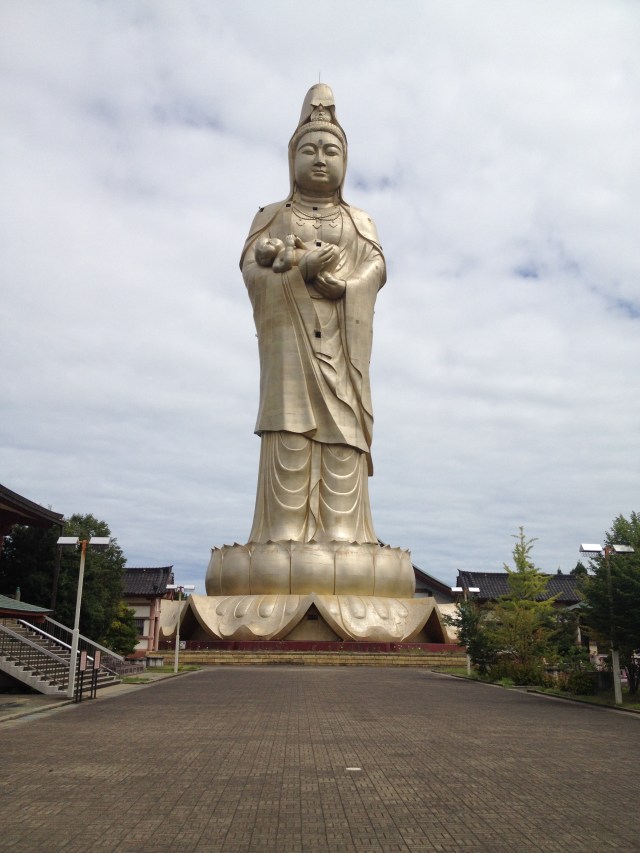
From the highway, we noticed a big statue on a hill. We decided to drive closer to check it out. It was eerily deserted, and I still have no idea what it represents.

IMG_0446

Our weirdest stop was for a tour of some random Styrofoam dome houses. These houses are supposedly earthquake resistant, retain heat in the winter, and stay cool in the summer. Also, they’re cute.

Finally, we reached Tateyama station, where dozens of Japanese hikers decked out in gaters, wide-brimmed hats and hiking poles were getting off buses. Upon further investigation, we realized that most people pay to take a bus and cable car up the mountain, a 37 kilometer, 1 hour journey, that takes you up to 2450 meters. Then all you have to do is walk for two hours to the top of Mt. Tate, which is 3015 meters tall.

We decided to find a place to camp, and postpone our decision about what to do the next day. Neither of us were thrilled about the idea of paying 4000 yen (about 35 dollars) apiece to get us up the mountain. We would both rather use our legs.

IMG_0494

We saw a sign for Shomyo Waterfall (350 m), so we decided to explore. Since we were there on a Monday late in the day, the place was almost deserted. As we trudged up a winding road to view the falls, we noticed an inconspicuous trailhead. The sign next to it (all in Japanese) informed us that we could follow this path for a multi-day hike to various huts. Hooray! We had found an alternative plan.

After a night sleeping outside – no tent necessary, it’s so hot here at this time of year – we awoke with the sun and were on the trail by 7.

The first stretch was a series of crumbly stairs and ladders that brought us up to the same ridge as Shomyo waterfall. Once we were on that plateau, we had a nice flat section that took us to a mountain hut (9000 yen per night), where we exchanged photos with some Japanese hikers.

IMG_0538

It was there that we discovered we could continue up a different mountain, Mount Dainichidaira. So we grabbed our packs and kept trekking!

The scenery reminded me of my gallivants in New Zealand. My multi-day backpacking trips in the South Island were some of the best moments of my life. It came back: the feeling that I’ve only experienced while hiking. I find it to be almost trance-like. My thoughts melt away. All that matters is the fact that I’m walking. There is no need to think about anything else.

I felt something that I hadn’t felt for a long time, a sense of stepping away from reality. Everything dissipates except for the scenery and the silence.

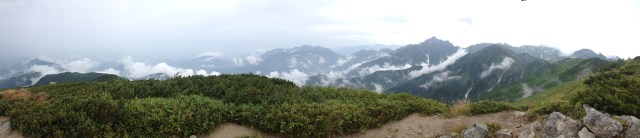
The cool clouds are drifting through me, but I’m sweating up this mountain. Up and up and up – passing mysterious purple berries and trees with red papery bark. The strange alpine flowers with translucent jellyfish petals. The moving blanket of fog covering the mountain as I watch, a silent and empty observer.

We reached the top at about noon, and took a half-hour to admire the view and eat our lunch. By the time we headed down, I had the same feeling as when I first jumped out of an airplane: when can I do this again?

IMG_0616

I want to backpack in Japan as much as possible. I hope to climb something at least once a month. And when I return to the USA, I want to backpack there too. The Pacific Crest Trail. The Appalachian Trail. Something big! Who wants to come?

Summer in Japan

Summer in Japan is cicadas. Summer in Japan is humidity, festivals, and fireworks. I’m in my apartment now, typing away, while outside I can hear the festivities of a neighborhood’s barbecue.

Normally, I might be tempted to go outside and introduce myself. However, my lack of Japanese has been hindering my interactions with the locals.

Whenever I start a conversation with a Japanese person, the first thing I usually say is “Eigo ga hanasemasu ka?” (Do you speak English?) Usually they say no. Then I move on to my next useful phrase: “Tsumimasen, nihongo wakarimasen.” (I’m sorry, I don’t understand Japanese.) Once that’s out of the way, I can start my neanderthal gesturing to get my point across. Or consult the translator on my iPhone.

I’m exaggerating, of course. I had a few heartfelt connections with locals, but mostly with the ones who are willing and able to speak English with me.

At the beach last week (which is practically bathtub temperature) I met two girls floating in an inflatable raft. They must have studied English recently because both of them were capable of normal conversation. Yay!

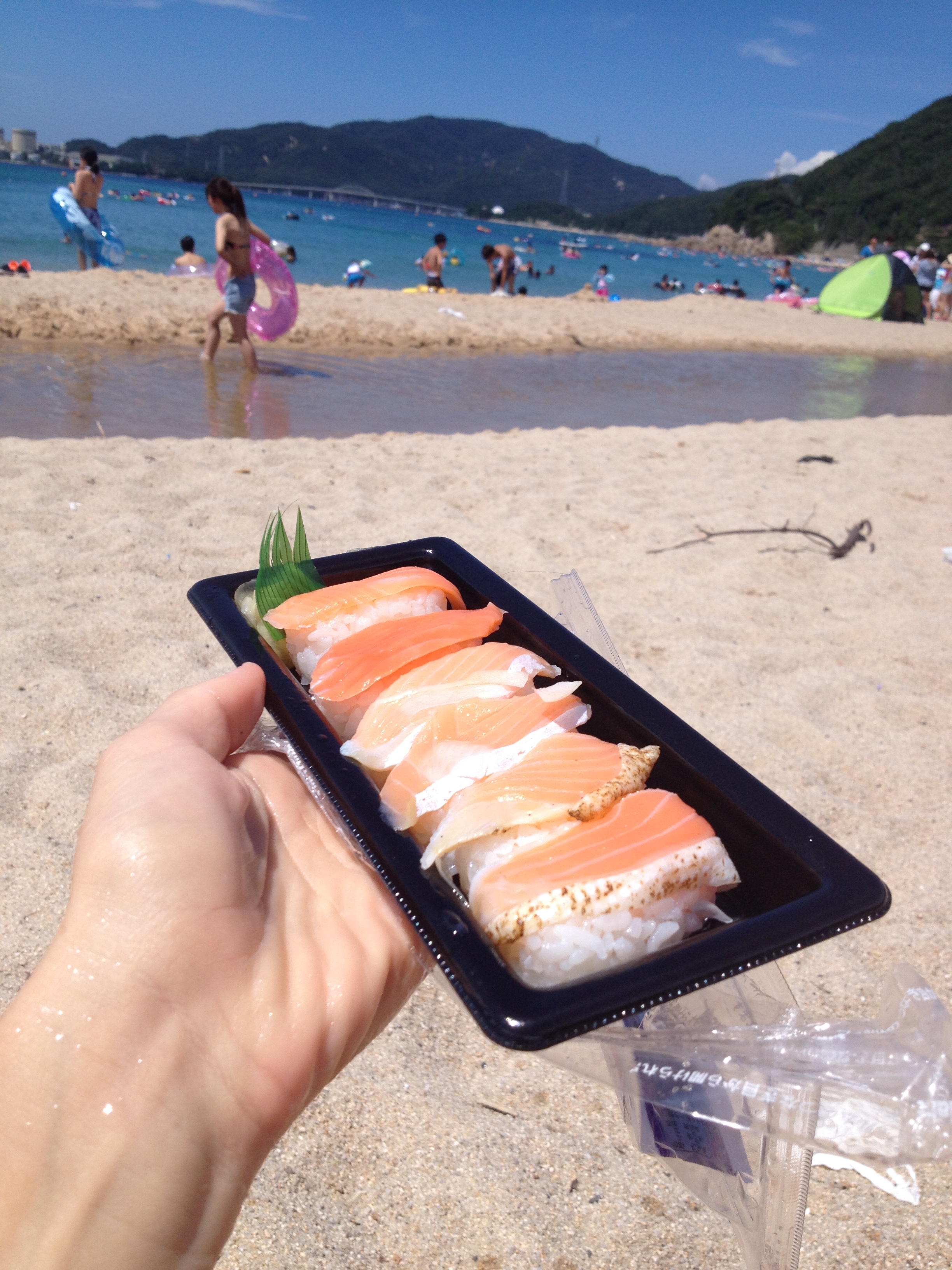
Sushi at the beach! Bought it at the daiso (convenience store) for 400 yen (less than 4 dollars).

They were from Osaka, and had driven 2 hours to spend the day at the beach. They were wearing make up and fake eyelashes, like many of the girls there. One told me she worked for Dolce and Giobanna, and the other was a secretary. I told them I was an English teacher, although it doesn’t really feel like it yet, since I haven’t started teaching!

I have had some fun interactions with my students, though. Last week I practiced with the volleyball and table tennis teams, and both were challenging in different ways.

About 9 years ago, I played volleyball for one year in high school, on the junior varsity team. I can bump, set, and spike. Although I know I’m out of practice, I still stay “I play volleyball” with confidence. However, when I was grading some of the student workbooks, I noticed a common theme: when the kids here tell you they do something, here’s how they phrase it: “I play volleyball, but I’m not good.” Why do they need to add that afterthought?

Anyway, I thought I was a decent volleyball player until I tried practicing with these 12-year-old girls. For 3 hours I joined them in their drills and scrimmages. Even though they are all at least 6 inches shorter than me, they were so much better than me! Why? Because during summertime, instead of going to camps, most of them have been at school, focusing on their extra-curricular. The volleyball girls have been practicing for 3 hours a day, almost every day, all summer!

Despite my ego being put in its place, I had a lot of fun, and it was a great workout!I’m proud of myself for trying, and I’m looking forward to further embarrassment at practice next week.

The following day, I joined the boys table tennis team, which was pretty fun. The team captain led us through practice: practicing forehands, backhands, serves, which devolved at one point into an epic ping-pong battle.

My school is surrounded by mountains and rice fields. Since it’s summer vacation, there are some days when there are only a few people at school: the Kocho-Sensai (Principal), the Kyoto-Sensai, (Vice Principal), one or two lone teachers, and me.

Most ALT’s (Assistant Language Teacher’s, that’s my job title) don’t have to go to school this week, however my supervisor wanted me to come. I don’t mind, though, as it has been very relaxing to be alone in the school without kids, and I’ve made some headway on my bulletin board I’m making for the classroom where I’ll be teaching.

11884968_10205979341296758_6315630298313993739_o

I painted these with my watercolors! I plan on using them for lessons too.

Besides the school activities, I’ve also been adventuring with my fellow ALT’s. When I was signing up for the JET program, they asked me my preference for how close I wanted to live to another English teacher. I checked the box for “walking distance,” and did they deliver! I’m living in an apartment complex with 11 other ALTs, and we see each other almost every day.

IMG_0206

Tonight, we all ventured to a local festival together where we dined at food stalls and watched fireworks together.

IMG_0129
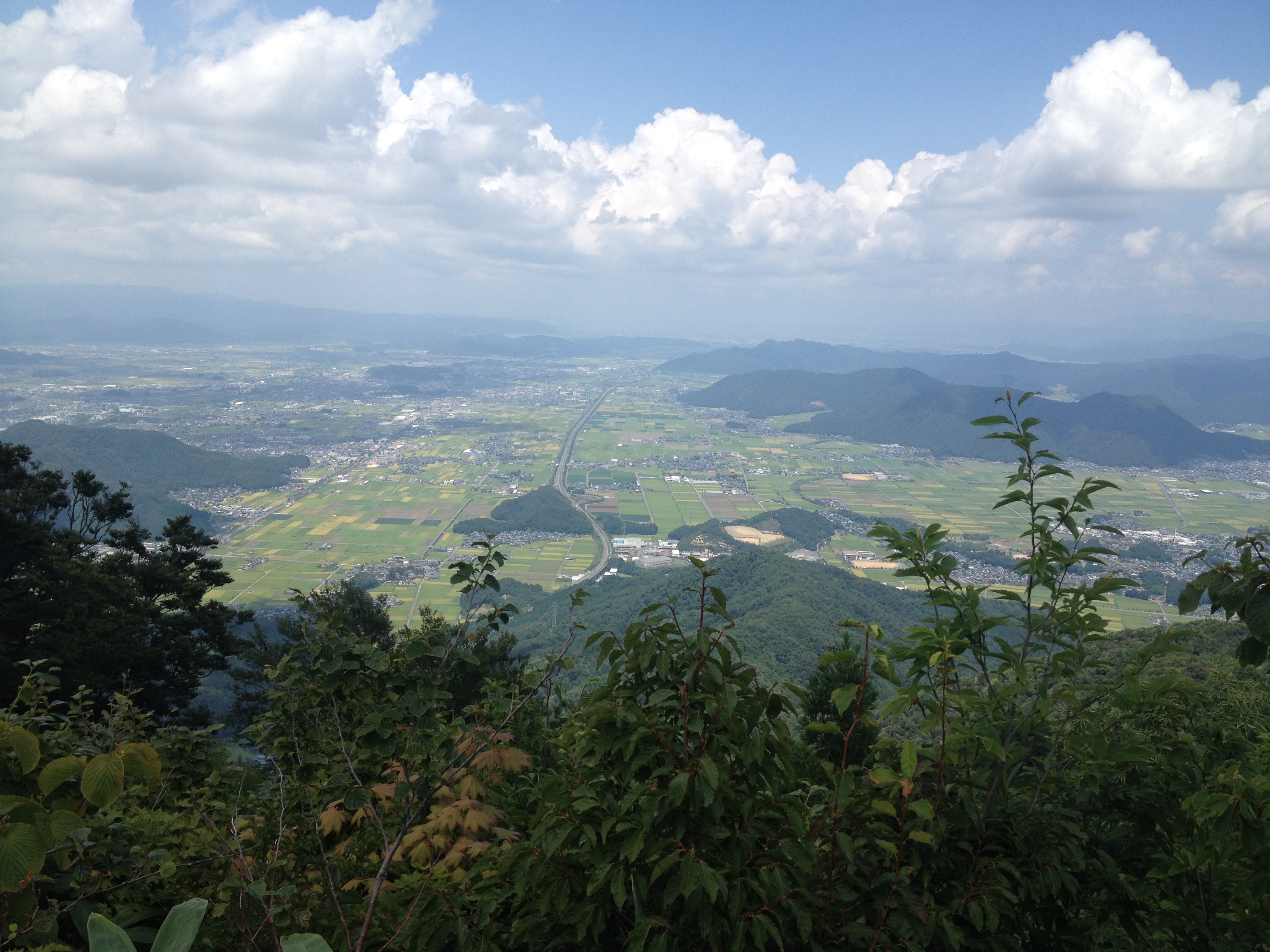
This is the view of my town from Mt. Hino, 2,608 ft / 795 m. We hiked up it last weekend in about 4 hours.

If I can find a balance between school, social events, sports, exploration, and alone time, I think that I can be happy here. It helps me to share my experiences and hear feedback from my friends and family. Thanks for reading, and let me know if you have any questions!

My New Life in Japan

I watch the rice paddies and steep mountains drift past me. The peaceful scenery calms my wild mind. What does the year have in store for me? I wonder as I near my new home.

I’m en route to Fukui City, Japan, in a bus filled with English teachers from all overnthe world. Behind me, Stephanie from Chicago excitedly points at every picturesque river and house she sees. Beside me, Leon from Jamaica sleeps – as we are all jetlagged from our journey.

IMG_3583

Last week, I arrived in Tokyo with about 200 teachers from Southern California and Arizona. We – along with 1800 others – are brand-new ALTs (Assistant Language Teachers) here to teach English in Japan. We are working for the Japanese Exchange and Teaching Program, also known as JET.

As soon as we stepped off of the 10-hour flight, we were greeted by dozens of enthusiastic Japanese volunteers in bright green shirts. Following them, we lugged our overstuffed suitcases down escalators towards buses that would take us into the city.

Every single person selected to participate on the JET Program is fascinating. Last year there were 8000 applicants worldwide, and 2000 were selected. All ALTs have a college degree, and many of us have traveled extensively or have lived abroad. Some of us have teaching experience or already speak Japanese. Another necessity of a ALT is to be outgoing and friendly, so there are many a conversation to be had with my hundreds of new friends.

After an 80 minute bus ride, we arrived at our fancy hotel in Tokyo and met our roommates. I was paired with two girls from Arizona, who were sent to different prefectures but whom I plan to keep in touch with.

The next few days were jam-packed with lectures and workshops from Japanese Government Officials, experienced ALTs, and Japanese teachers. 

We learned some valuable lessons from Horonobu Suzuki, the Vice Principal at Saitama Prefectural Uruwa High School. He started teaching English in 1986, and the JET program started the following year. In his 30 years of teaching, he has worked with dozens of ALTs.

Suzuki’s most memorable story was about Japanese girl in his class who excelled at English but was too shy to speak very often. He remembers the exact moment when an American ALT told her that she spoke very well, and sounded just like a native speaker. He saw a spark in her eye and smile on her face, and pinpointed this compliment as a life-changing moment for her. She went on to study English in university, and eventually moved to Australia and became a teacher.

He told us that in a recent survey, 93% of Japanese schoolteachers reported that their students’ motivation to learn English increased when there was an ALT in the classroom.

Teachers have the power to change lives. I know this for a fact, because I can still recall some of the positive things my 3rd grade teacher said to me. Genuine, thoughtful praise is not easily forgotten. It can even change the course of someone’s life. I hope that my words of praise will inspire my students.

IMG_3715

We made it! I’m currently writing this from my air-conditioned apartment. It’s 10:30 at night and 81 degrees outside!